Most travel agencies sell the Peruvian Amazon like it’s a clean little add-on between Cusco and Lima. They show you a picture of a macaw, hand you a generic list of linen shirts, and send you on your way.
But treating the Amazon like a predictable safari is the fastest way to spend a trip sitting in a lodge common room, staring at a wall of rain. It doesn’t work out here.
The jungle changes constantly depending on where you are, how you got there, and what the weather decided to do that week. To actually experience the Amazon, you have to understand how things function when you’re standing in the mud—from the cloud forests of the high slopes down to the wide river arteries. This is where itineraries stop working entirely.
Mistake 1: Rushing the Amazon and Assuming Every Region Is the Same
The single biggest planning mistake I see is treating the Amazon as a short, two-night box to tick on a broader Peru itinerary. Travel agencies routinely slice the region into tiny, rushed packages, operating on the false assumption that all these areas are interchangeable.
A lot of travelers build Peru itineraries assuming these regions function the same way, then end up underestimating distances, weather delays, and how physically exhausting the transitions actually are. Places like Camanti, Tambopata, Tarapoto, Iquitos, and Manu are completely different types of jungle that require serious time to understand.
A massive part of this mistake is assuming the logistics and terrains are identical. They aren’t. If you want a quick flight in, your options are structurally limited. Puerto Maldonado (the gateway to Tambopata), Tarapoto, and Iquitos can all be reached by air.
If you are eyeing the steep cloud forests of Camanti or the deep wilderness of Manu, a flight isn’t an option. Neither can be reached by air, meaning you are locked into a multi-hour overland commitment just to get past the gates.
Once you are actually there, the physical environments have completely different rules. Tambopata is a lowland jungle. It is flat terrain defined by slow, wide river arteries and clay licks. You will not find waterfalls cascading through the trees here.
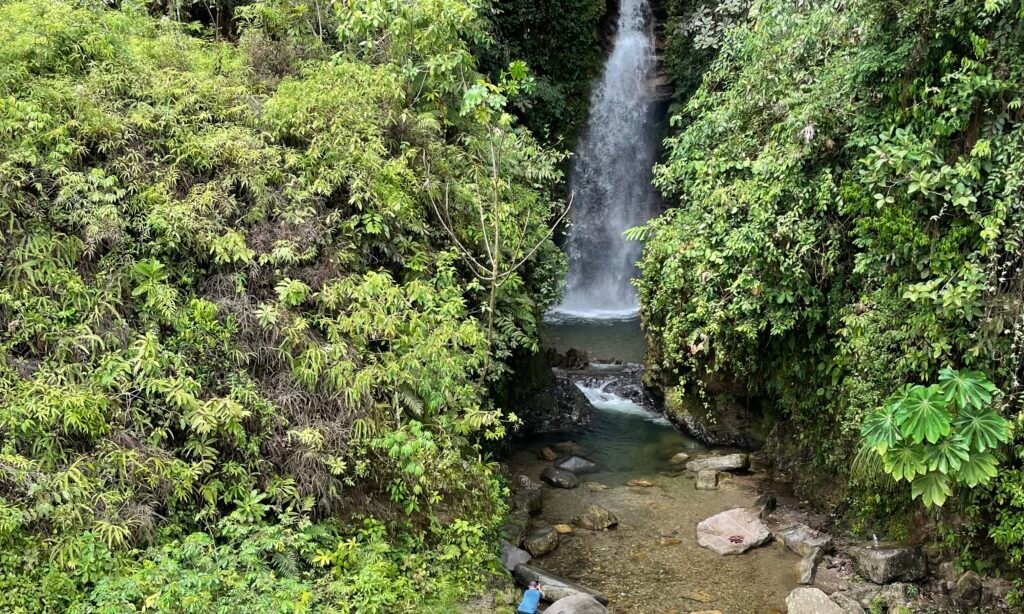
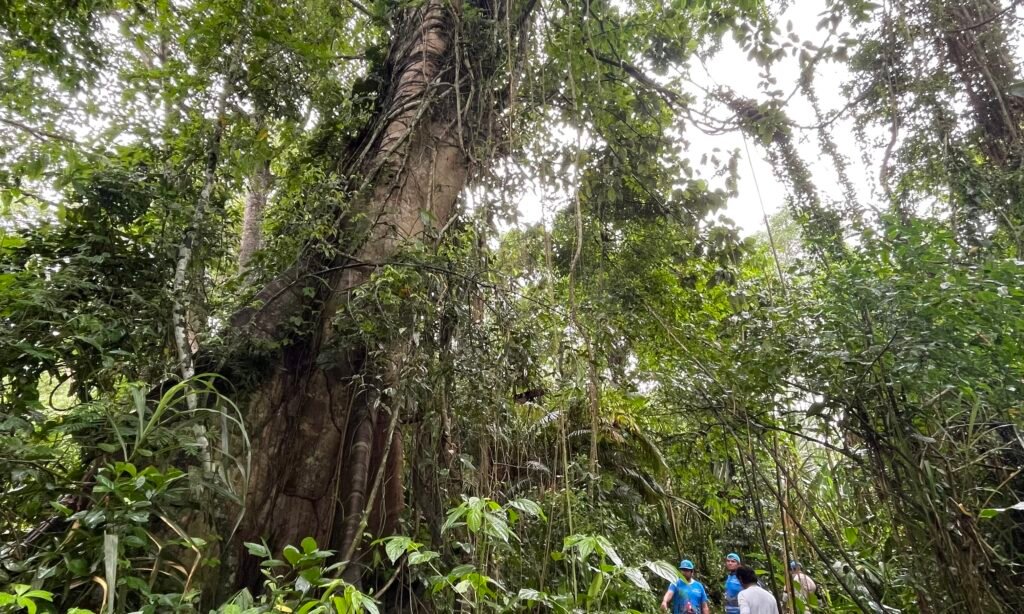
Contrast that with a place like Camanti, which sits on the steep eastern slopes of the Andes. This is a high, rugged cloud forest choked with fast, rocky rapids and massive waterfalls where the mountainside runs in sheets during a heavy rain. The trees, the elevation, and the wildlife are entirely distinct from the flat riverbanks down in Puerto Maldonado.
Trying to cram these immensely different environments into a tight schedule while ignoring how you physically get there is a mistake. The territory dictates the clock out here, not your return flight.
Mistake 2: Relying on Internet Packing Lists and “Expert” Advice
The next planning mistake happens before people even leave home. Travelers spend weeks buying specialized gear from online recommendations, assuming that a high price tag translates to performance in the rainforest.
Worse, they assume that the “expert” online who wrote the packing list articles they read is actually someone who has spent years traveling these routes, rather than a content creator who spent just one to three nights in a single lodge. The physical reality of the riverbanks completely humiliates those gear and guide assumptions.
There is a specific look I recognize instantly on first-time tourists arriving in Puerto Maldonado. They step off the flights or out of the transport vans wearing brand-new, crisp, tan-and-olive attire bought straight off an internet page, looking like they are about to film a commercial.
To get onto the long motorized boats that navigate the Tambopata and Madre de Dios rivers, you have to descend steep, exposed clay embankments. When it rains, this clay behaves exactly like potters’ clay.
It is thick, baby poop brown, and stinks depending on the section of the river, and becomes as slick as a sheet of ice. It cakes onto the wooden planks and the concrete steps near the docks, doubling the hazard. Not every boat launch is chaos, but when the rain hits, the ground changes completely.
The locals dress in stained t-shirts, shorts, and old athletic shoes caked in dried mud. As a fresh boatload of tourists arrives, the locals often stand quietly and take bets among themselves on exactly who in the group is going to lose their footing.
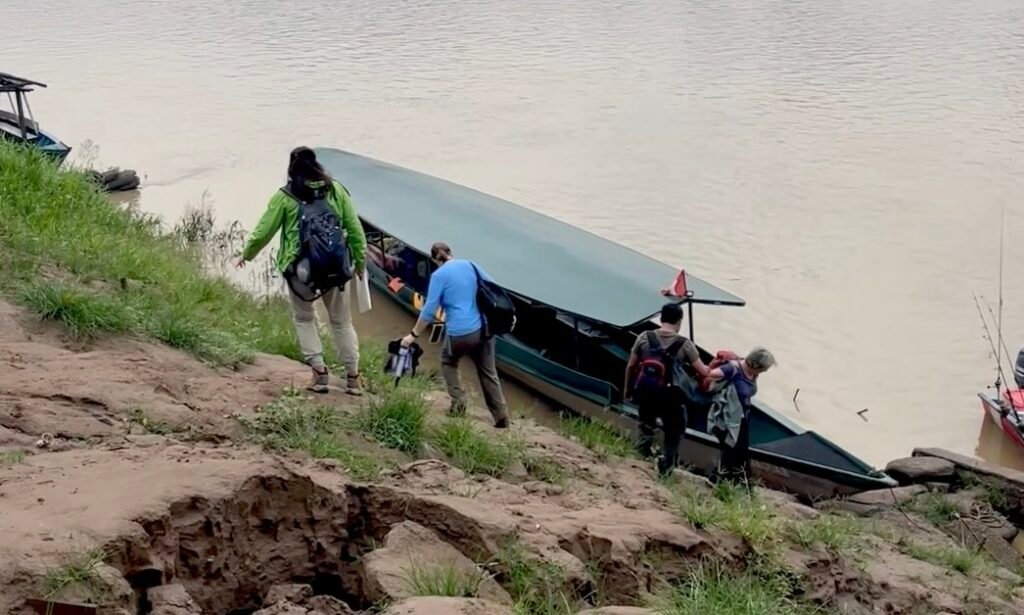
The fancy, heavy-tread hiking boots people spend weeks stressing over online are the first things to fail. The thick clay grips the soles, filling the treads instantly until the shoe has no grip left at all.
The mud either trips them outright or suctions the boot clean off their foot. And on almost every launch, someone ends up sliding down the slope on their backside or taking a wet plunge straight into the river.
I remember coming back from a week-long fishing trip during a steady drizzle when the mud had become a genuine mess. Dave was older, and trying to get him up that slick bank with heavy gear was too high of a risk, so I had him wait at the top of the ridge where the ground was stable.
Marco, the river guides, and I spent the next hour hauling equipment up from the hull in multiple trips. Every single one of us went down at some point. I twisted an ankle and banged up my knee on the logs; Marco gouged his shin against a wet frame; and one of the local guides came within an inch of sliding headfirst back into the brown current.
Your clothes don’t look like an internet photo after that; they just smell like the low jungle.
Mistake 3: Treating Puerto Maldonado Like a Necessary Evil
Another massive planning mistake is letting a travel brochure convince you that Puerto Maldonado is just an unavoidable airport terminal to drop through before hiding away in an isolated river lodge.
Most travelers lock themselves into a rigid lodge itinerary downriver. In doing so, they completely isolate themselves from the town’s reality, missing the local character. Worse, they lose all flexibility the moment the weather turns or the schedule breaks.
The standard travel brochures treat Puerto Maldonado as a sterile gateway—a place to sleep for one night in a basic hotel before fleeing to an expensive, isolated lodge downriver. Because of that, most tourists spend their entire trip hidden away inside their lodge common areas, playing chess or checkers in a hammock, drinking a lukewarm beer, and complaining to each other about the wildlife they haven’t yet seen.
They miss the town completely, even though it is the last major road-access hub in the area before river-only travel dictates your movement, and it is surrounded by active jungle communities.
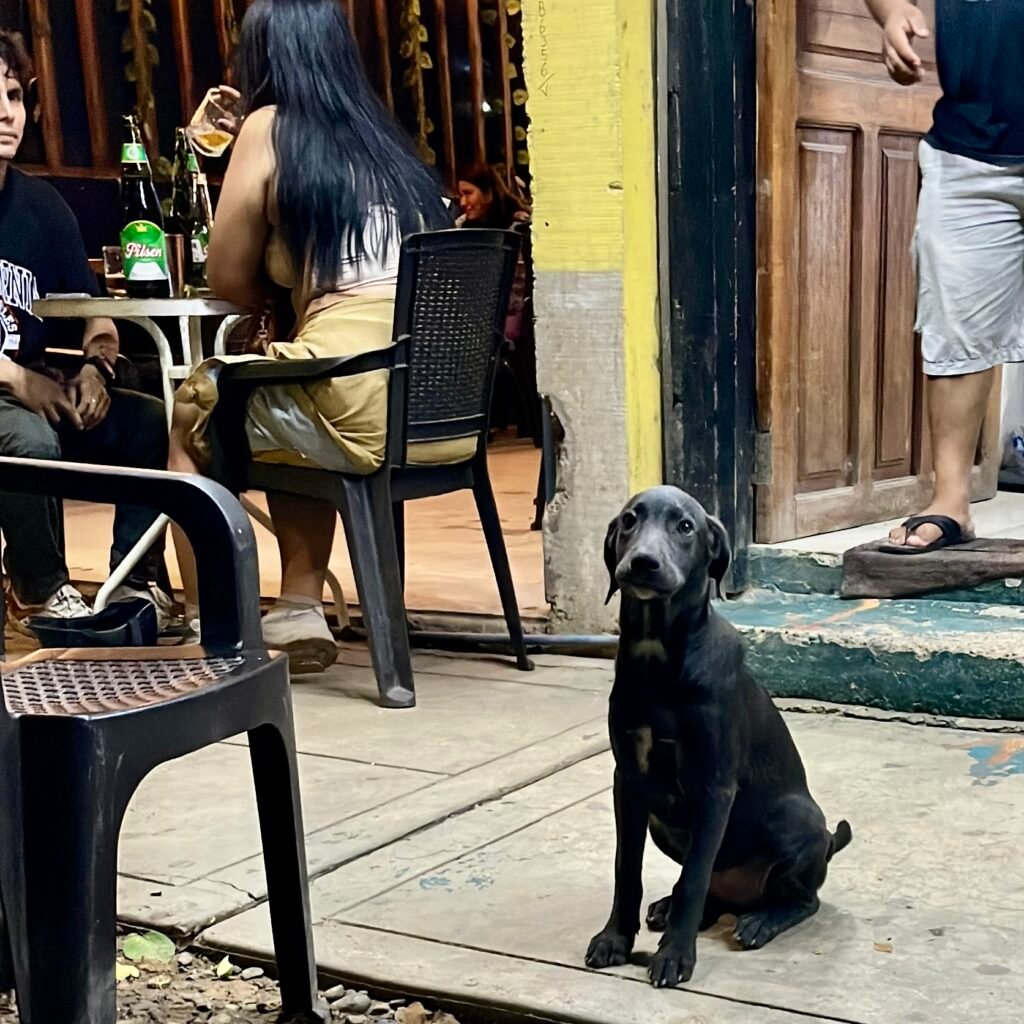
A real night in Puerto Maldonado doesn’t sound like Cusco or Lima. The pan-flute tracks and generic reggaeton disappear, replaced by the heavy, rhythmic thumping of Salsa and Cumbia coming from roadside bars and street corners.
The food isn’t staged for an Instagram feed; it is wood-fired, smoked, and intensely regional. The jungle has a heavy reliance on plantains, but the real prize is the wood-smoked pork. The local Cecina sausages, smoked salamis, and regional cheeses available in the town markets are some of the best charcuterie you can find anywhere in the country.
There is a hard rule I follow to navigate the food here, though: I avoid the river fish dishes. Even though river fish is a major local staple and tastes incredible, illegal gold mining upstream means there’s a heavy mercury risk and a high chance of a severe stomach shutdown or a bad case of the squirts.
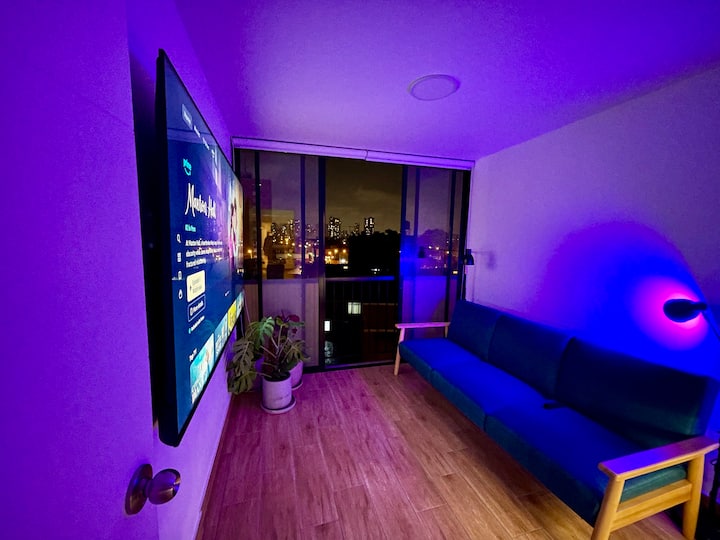
I broke this rule once with a plate of jungle ceviche in Puerto Maldonado, and it resulted in a bad case of stomach issues. While a tourist at a high-end lodge would be stuck in a ventilated bamboo bungalow listening to the neighbors and the jungle echoes through a screen door, I was glad to be staying in a cheap, s/50 hotel in town that had a solid concrete wall and a private bathroom.
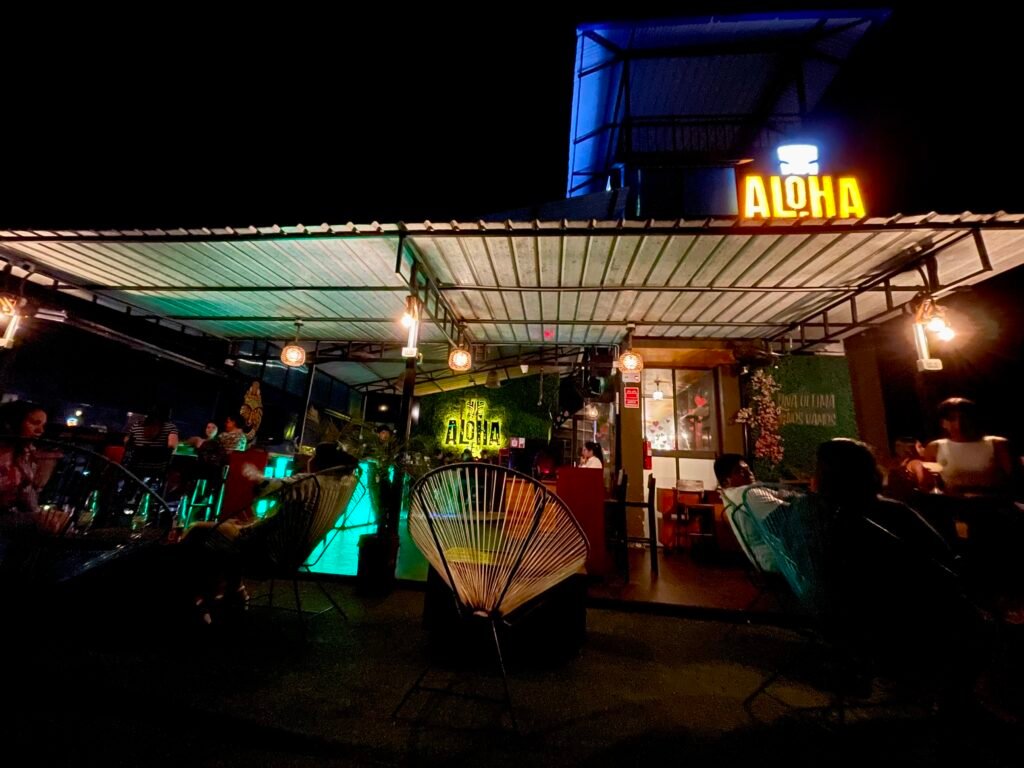
If you skip the lodge bubble, the town has a strange, chaotic energy. A proper night starts with roadside beers or drinks at a small tiki bar, shifts to the street food carts, moves to a rooftop cocktail spot like Aloha, and finishes inside a dance club well after the sun has already come back up over the canopy.
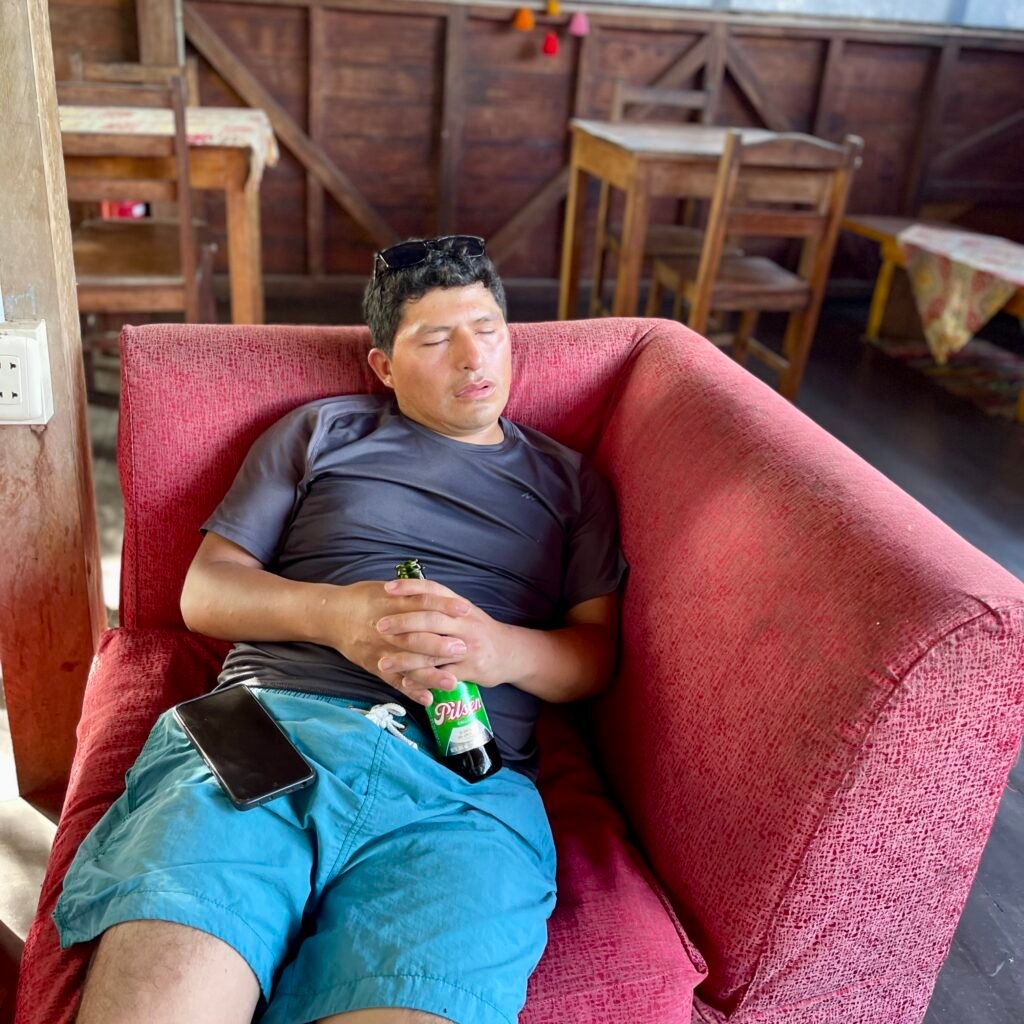
On a different trip, I had a friend Americo with me who is a guide from Cusco experiencing the jungle for the first time. I took him out and he had the night of his life. So much so that we almost had to carry him home.
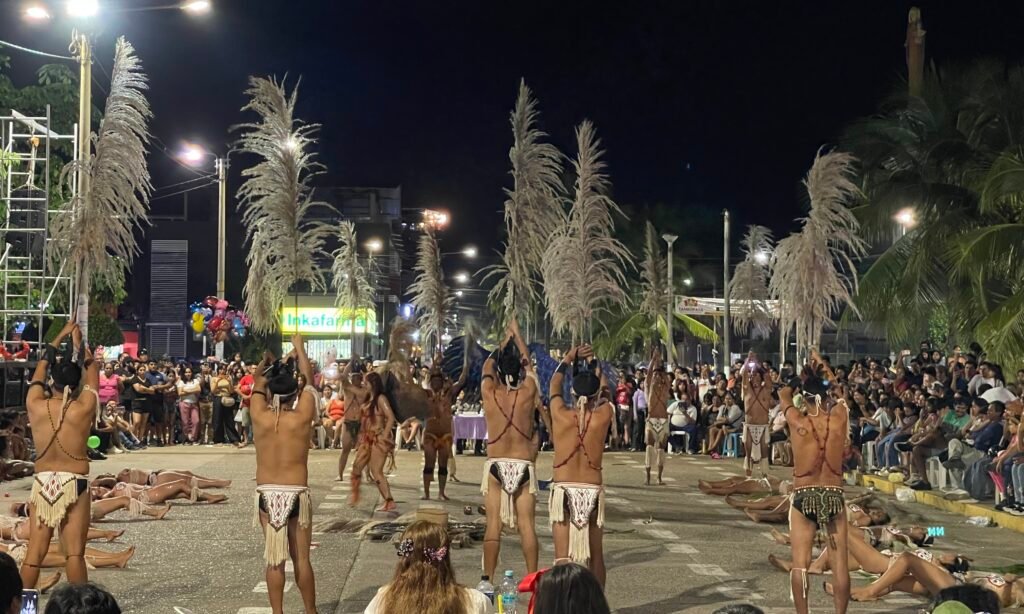
And on one occasion, he even had to run away from a mid-30’s stark naked indigenous woman speaking a language he didn’t recognize, but who was definitely professing her undying love for him, in the middle of Puerto Maldonado’s main Plaza de Armas during Carnival month. Choosing a basic, accessible place to stay on the outskirts of Puerto Maldonado is often the smarter, more flexible move if you want options when the rain hits.
Mistake 4: Expecting Constant Wildlife Sightings
The final mistake is treating a primary rainforest like a theme park where wildlife performs on a fixed schedule. People arrive expecting clean walkways and curated viewing platforms, refusing to adjust their expectations to face the raw humidity and physical pressure of the trails.
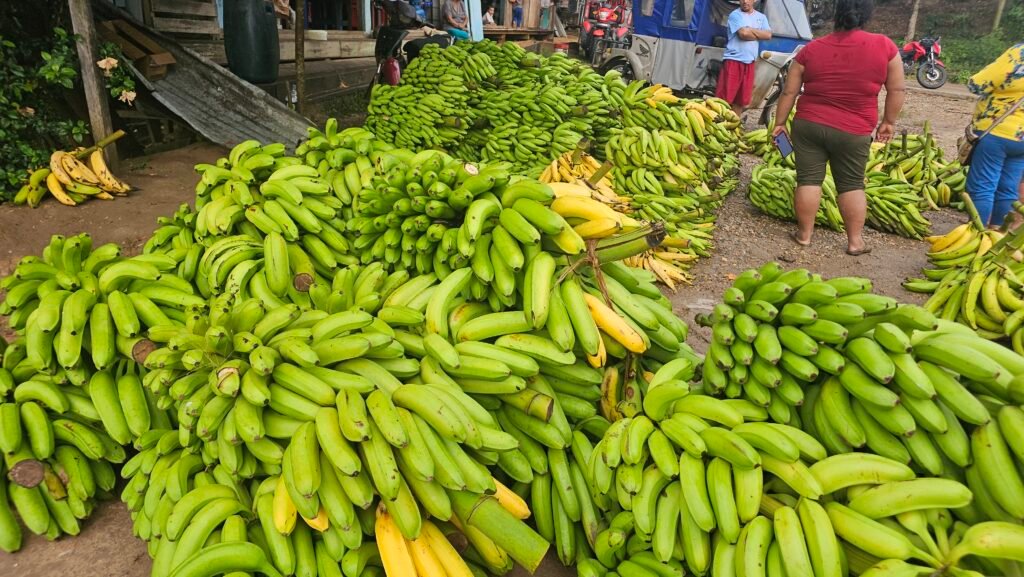
You see the illusion of curation in the local markets, where the volume of the low jungle’s produce is on full display. It isn’t just about finding rare, exotic fruits; it’s the common staples like plantains, coconuts, avocados, and massive mangos growing like weeds everywhere you look. They are piled so high on the wooden stalls, so bright and heavy under the heat, that the fruit looks completely fake, like plastic props.
But the moment you leave the town stalls behind and step onto a trail like Monkey Island right after a storm, the environment turns entirely flat, silent, and heavy. The morning after a heavy rain, the jungle heat comes back with a vengeance, the air becomes totally stagnant with humidity, and the trail transforms into a grueling gauntlet.
We were out tracking monkeys on one of these mornings, getting absolutely eaten alive by the massive black mosquitos that populate the island. These aren’t the small bugs you swat away at home; these things feel like being stabbed repeatedly with a hot sewing pin, and they have no problem biting straight through a heavy canvas jacket.
Most of the time, the jungle is quiet between these extremes, and I can walk for an hour seeing nothing but wet leaves. We were moving at a brutal pace along the muddy paths, refusing to slow down or pause for even a second because the moment you stopped walking, a cloud of black needles settled on your shoulders. Everyone was sweating, irritated, and exhausted.
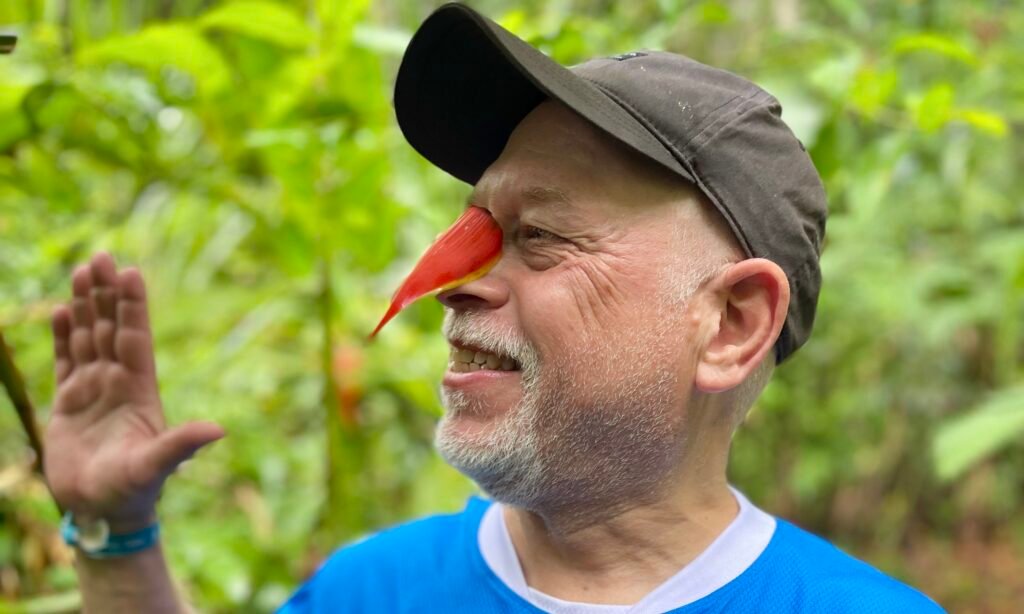
Right in the middle of that heat, our guide, Percy, stopped us. He reached out, plucked a bright red and yellow wild flower from the brush, and turned around with a grin.
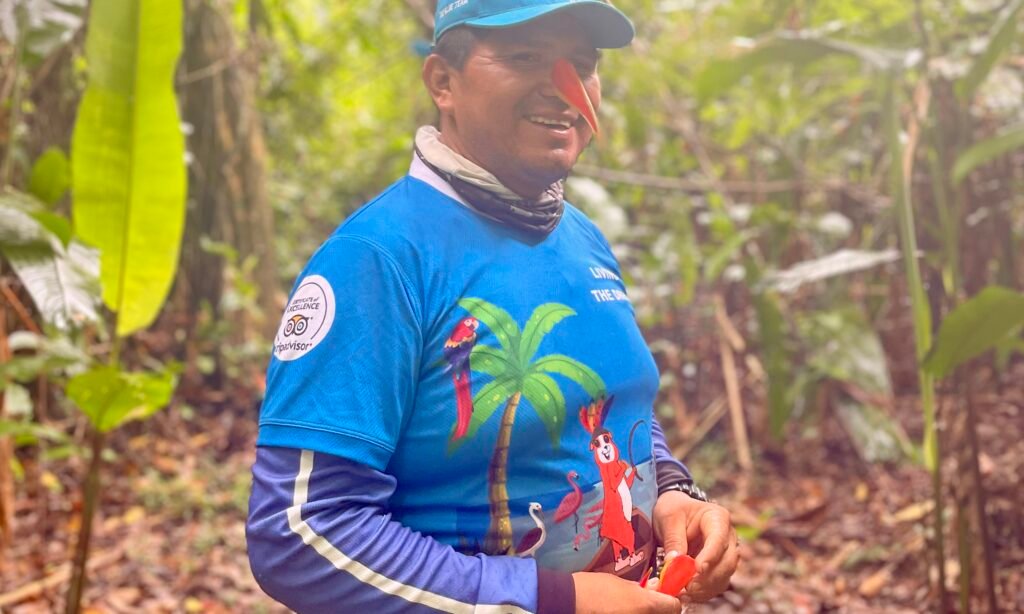
He showed us how the local kids in the river communities balance the stalks on the bridge of their noses to play parrot when they’re running around the jungle. Dave took the flower, stuck it on his nose, and stood there smiling with his hand up in a thick patch of green leaves.
We were covered in mud, drenched in sweat, and actively being stabbed through our clothes by insects, but Dave just stood there looking like a bird in the middle of the canopy.
The Way The Amazon Jungle Actually Works in Peru
The washed-out roads in the cloud forest, the slick river mud, the local bars in town, and the swarms of insects on the trails aren’t separate disruptions. The low-lying rivers are fed by the same extreme rainfall that causes landslides up on the highway. The proximity of a hotel or a lodge doesn’t diminish the wilderness; it just changes your ways out when the rain hits.
The wet season and the dry season require a different approach to how you handle your days. You sit on a wet wooden bench waiting for a boatman who is late because a log jammed his propeller upstream.
The hum of insects against the screen is the only sound left. The mud is drying on your boots, the air is thick enough to chew, and the landscape is just doing exactly what it does in the wet season.
Ultimately, all these mistakes—from ignoring regional logistics and buying useless gear to hiding in a lodge or expecting a curated wildlife show—stem from the same root: trying to force your own schedule on a place that refuses to abide by it.
You have to stop viewing the jungle as a series of obstacles to bypass or a theme park to consume. Instead, treat it like the raw, unpredictable force it can be, and you might actually see it for what it is.
Don’t Plan the Amazon Like a Brochure
Most Amazon itineraries fall apart because they ignore how different the regions actually are—altitude shifts, river logistics, seasonal road conditions, and lodge isolation all change what’s possible on the ground. If you’re planning a trip, build it around how the Amazon actually operates, not how it looks in travel ads.