When you step off the boat or plane, the Amazon doesn’t just hit you with heat; it hits you with a shift in reality. The air is thick, alive, and smells of everything growing and decaying simultaneously.
Most travelers arrive with a suitcase full of “destination” gear—stuff they saw in a brochure—but within the first few hours, that gear usually becomes a liability.
I learned this the hard way years ago, and I’ve watched countless others struggle through the same cycle of discomfort and wasted effort. This is a practical guide to Amazon rainforest packing, jungle clothing systems, and travel essentials based on repeated field experience across humid tropical environments.
Amazon Rainforest Packing List: Gear Failures & Survival Tips
The first rule of the jungle is that your relationship with technology must change. I remember a trip to Tambopata with Marco, a senior mountain guide from Cusco, and our friend Diego.
They brought a high-end, “fancy” dry bag, confident it would protect their electronics. They sealed their iPhones and a Samsung inside, convinced they were creating a sanctuary.
But the Amazon isn’t a locker; it’s an active ecosystem. By midday, the trapped moisture inside that bag had been heated by the sun into a pressurized steam bath. When they opened it, both phones were dead—a disaster that severed their connection to the experience for the rest of the trip.
If you’re planning a trip, don’t gamble with your gear. High-end rubberized bags often trap moisture. For electronics, a ventilated, accessible pocket or a specialized breathable dry-pouch is the only way to avoid the “steam-cooker” effect that destroys internal hardware.
If you’re still in the planning stage, your gear is only half the equation. The other half is coverage—because most problems here aren’t gear failures, they’re evacuation delays.
What to Wear in the Amazon Jungle: The Lycra Clothing System
Once you realize your gear is constantly under siege, you start to rethink how you protect your own body. I used to see people in stiff, “safari” shirts that trapped every ounce of sweat and held onto it like a sponge. That’s a mistake.
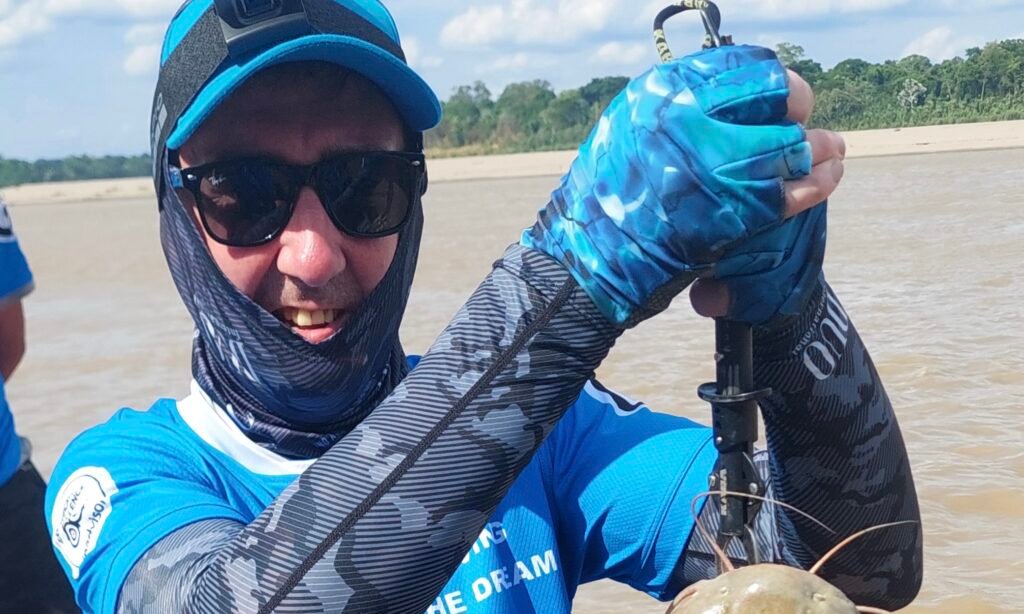
When you’re walking in the jungle humidity, you don’t fight the environment; you work with it. I replaced the heavy layers with fishing-store-grade Lycra: sleeves, fingerless gloves, and a neck/face covering.
When the heat becomes oppressive, I dip them in the river. The resulting evaporative cooling is the most effective way to regulate your body temperature in the tropics. Beyond that, they provide a physical barrier against the midges and sandflies that swarm the riverbanks.
If you only buy three things for your Amazon jungle wardrobe, make it these: (1) high-quality, moisture-wicking Lycra sleeves, (2) a neck buff for bug and sun protection, and (3) a ventilated, quick-dry canvas-style jacket. Everything else is secondary—this system is the difference between being functional and being a miserable, overheated mess.
Amazon Rainforest Packing List: Complete Gear Checklist
Mobility is the difference between a successful trip and a grueling one. The most common error I see is the “everything-in-case-of-emergency” pack. Lugging bags onto boats and in and out of lodges is exactly how you get exhausted.
Essential Packing Checklist:
- Quick-dry clothing: A 3–5 day rotation system is all you need.
- Lycra sleeves + neck buff: Non-negotiable defense against insects and sun.
- Headlamp with spare batteries: Standard batteries are more reliable than rechargeable units in remote lodges.
- High-capacity power bank: Treat this as a survival tool, not a convenience.
- Lightweight, ventilated rain layer: Essential for protection during humid storms.
- First-aid basics: Focused on antiseptic, blister care, and antihistamines.
Whether you are looking for the best Amazon travel essentials or a streamlined jungle packing guide, the secret is modularity. Stop packing for 10 days and start packing for a 3-day cycle. If you are still unsure about the logistics, read more about managing the weather and the best time to visit the Amazon before finalizing your kit.
Pro Amazon Packing Tip: though the lodges often supply ‘wellington boots’ or ‘gumboots’, do look at your shoe choice before visiting. As they can be a real liability on the river banks and are one of the biggest mistakes I often see first-time visitors making.
Essential Power and Lighting: Survival Gear for Remote Lodges
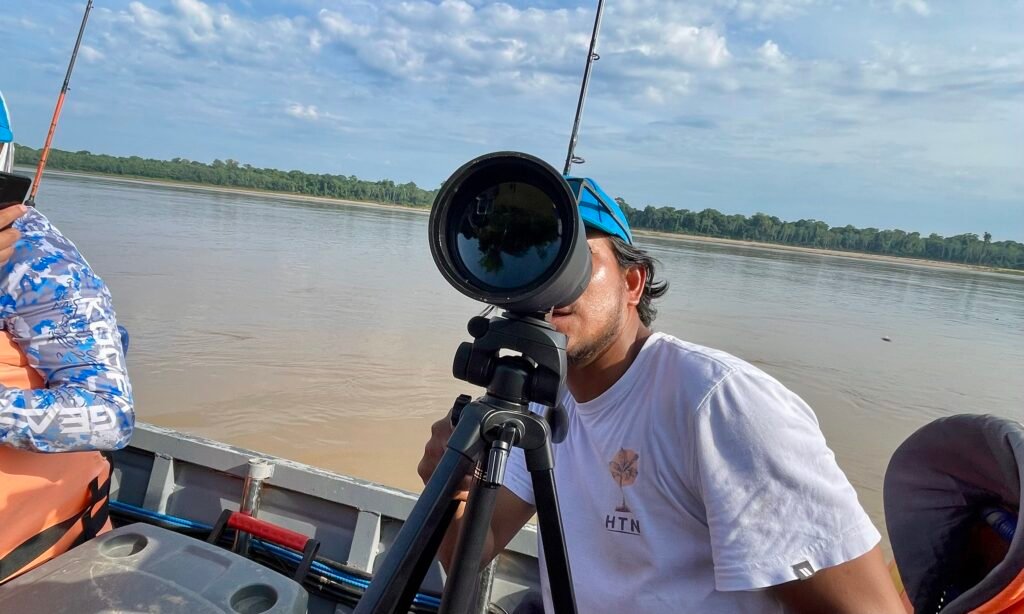
Power in the Amazon jungle is often temperamental, and a high-capacity battery bank—preferably one with an integrated torch—is the only way to ensure you aren’t left in the dark.
Do not rely on lodge power. A high-capacity, durable power bank is not a luxury; it’s a survival requirement. Pair this with a headlamp that uses standard, swappable batteries; when you’re out on a night trek, you don’t want to be anchored to a wall socket waiting for a recharge.
How to Choose the Right Amazon Lodge (Avoid 1-Star Swamp Bungalows)
As you settle into your lodge, you might see it as a sanctuary, but every building here is a temporary outpost in an endless war against the environment. The quality of your stay isn’t determined by the photos on a website, but by the level of staff engagement.
A lodge that is winning the battle against the swamp is always worth prioritizing over a property that’s letting the environment reclaim it. Check out my guide on how to choose the right lodge to ensure you aren’t booking a 1-star experience in a swamp.
Gear You Should Never Pack (What to Leave at Home)
- Heavy Cotton “Safari” Shirts: They trap sweat, stay damp for days, and invite mold.
- Bulky, Rubberized Dry Bags: They turn your electronics into “steam-cookers.”
- Over-Packed “Emergency” Kits: If you aren’t using it daily, don’t lug it. Mobility is your best survival tool.
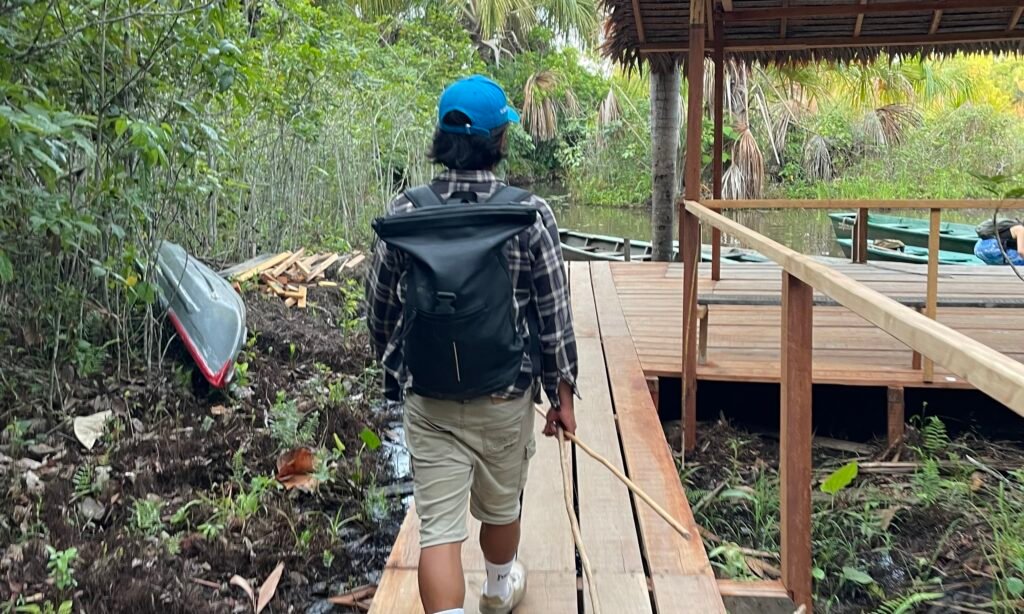
Nighttime Situational Awareness & Jungle Safety
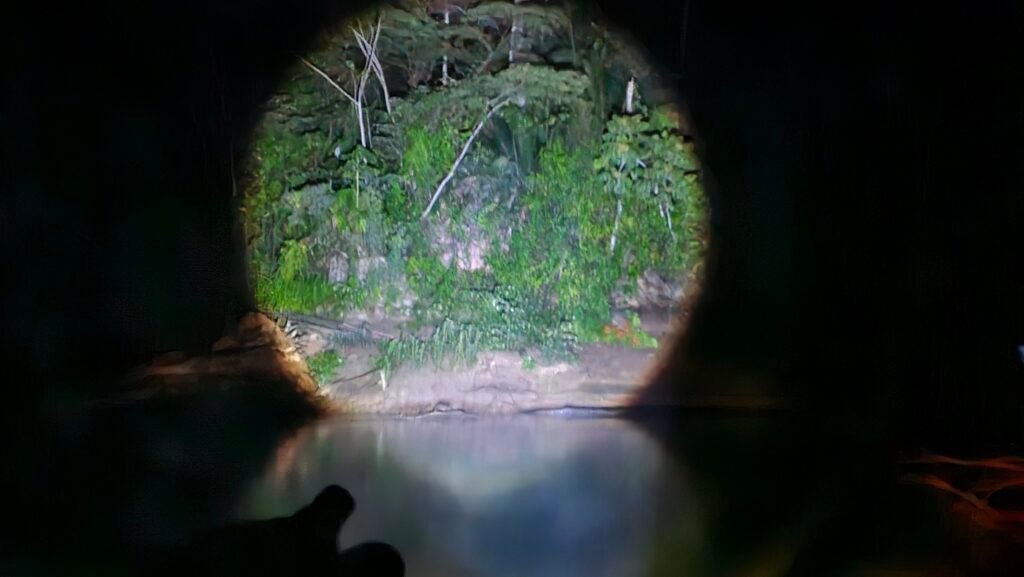
The real Amazon reveals itself when the sun goes down. The darkness demands your total attention. I remember walking back one night with a group, pointing my beam ahead, when I caught two large, glowing eyes reflecting back at me.
I stopped dead and told the guys, “murder kitty.” We watched as a jaguar, moving with impossible, fluid silence, melted into the brush.
The next day, Etson, a local farmer on whose farm we were camping, confirmed the big cat was a regular visitor who hunted his animals. It’s a humbling reminder that when you’re out there, you’re just a guest.
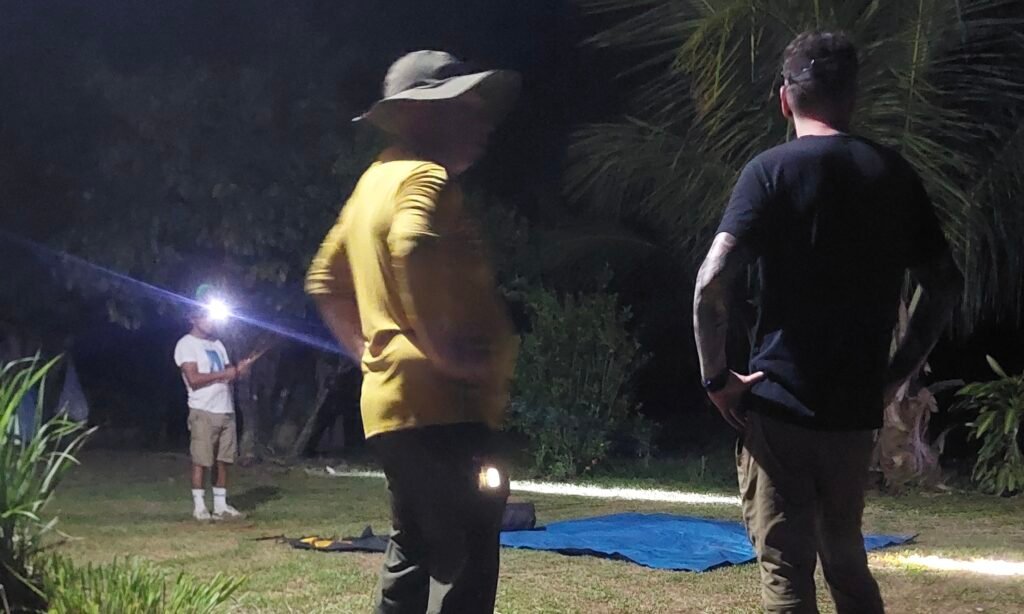
Another time, I stood on a mud mound to get a better view, and the ground was crunchy like walking on egg shells. I flicked on my headlamp only to find the whole patch covered in fist-sized, furry tarantulas.

We’ve even spent nights spotlighting caiman, trying to stun them with our beams so Marco could attempt a clumsy, unsuccessful tackle—which usually ended with him taking an involuntary bath in the river.
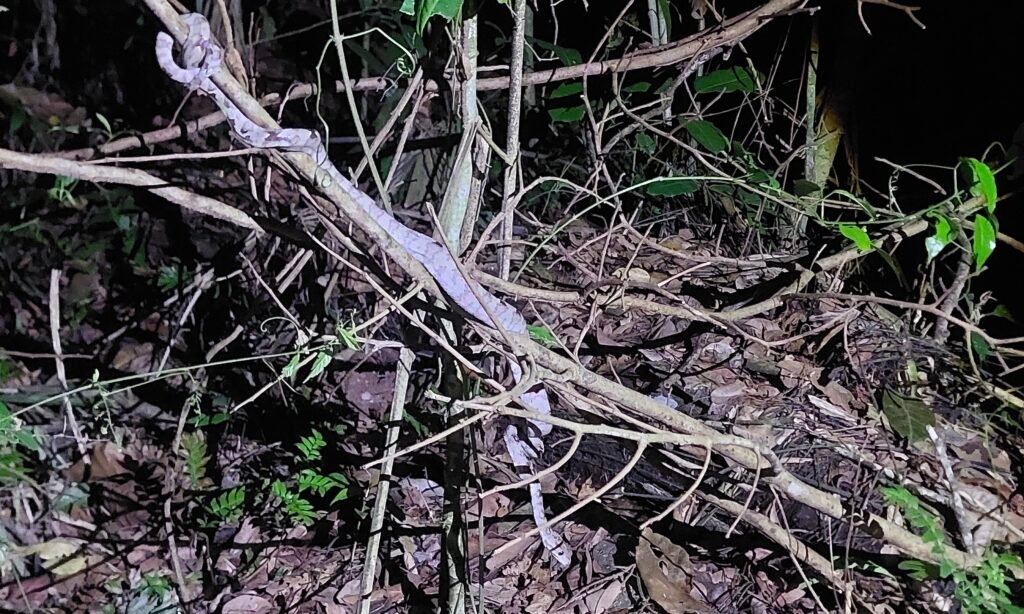

Pro Amazon jungle tip: When your guide asks you if you have any food in your bag or bungalow, they’re actually warning you that if you do, you might get visited by some ‘jungle friends’ in the middle of the night.
The Essential Survival Priority: Travel Medical Insurance
The jungle is relentless, and your health is just another part of the environment that requires active maintenance. I’ve lived the lessons that most travelers only read about: I’ve dealt with the debilitating misery of dengue fever, seen friends like Dave suffer through severe side effects from malaria prophylaxis, and personally fought off a case of cellulitis in both feet.
The Amazon doesn’t care about your itinerary, and if your body isn’t prepped, a small scratch can spiral quickly. The same pattern shows up in medical emergencies—distance, delay, and access matter more than severity.
I’ve seen situations where a minor infection in a toe or hand became a multi-day evacuation decision simply because the nearest transport was hours away by boat and weather-dependent. In remote Amazon basins, the real risk isn’t the cost of treatment; it’s access to evacuation.
Don’t Treat Medical Coverage as Optional
The Amazon is a high-risk, low-access environment where a minor infection can quickly escalate into a complex multi-day evacuation. Standard travel insurance often fails to cover emergency aerial extraction from remote jungle lodges. Secure the right coverage before you leave the grid.
Many standard travel policies don’t automatically include emergency extraction from jungle lodges or amazon river systems. If it doesn’t explicitly say “emergency evacuation from remote locations,” it’s not sufficient for Amazon travel.
Treat your medical insurance as essential gear, not optional paperwork. If you are heading into the Peruvian, Brazilian, Colombian, Ecuadorian or Venezuelan Amazon, this is one of the few costs that should be treated as non-negotiable.
I’ve written extensively about my own brushes with jungle health crises to show exactly how quickly things go sideways. Respect the environment and keep your gear light. The Amazon doesn’t reward preparation—it only punishes the lack of it.
Stop Packing for a Brochure, Start Packing for the Jungle
The Amazon doesn’t reward gear that looks good in photos—it punishes gear that can’t handle the humidity, persistent mud, and rapid equipment failure. Don’t let your trip be compromised by the wrong kit or ill-conceived logistics. Build your gear system based on how the basin actually functions.